

Planning an HVAC system for a new construction project presents a unique opportunity. Unlike retrofit projects where contractors must work around existing conditions, new construction allows builders, architects, HVAC designers, and property owners to create a system specifically tailored to the building’s layout, energy goals, occupancy needs, and long-term performance requirements.
For Michigan builders, HVAC planning is particularly important because systems must perform effectively during cold winters, humid summers, and seasonal weather fluctuations. Proper HVAC planning can improve comfort, increase energy efficiency, reduce operating costs, enhance indoor air quality, and help avoid costly modifications after construction is complete.
Whether constructing a custom home, residential development, commercial facility, or mixed-use property, HVAC planning should begin early in the design process. Decisions regarding equipment selection, ventilation, ductwork layout, zoning strategies, and control systems can have lasting effects on building performance for decades.
Many builders work with professionals specializing in new construction HVAC installation to ensure systems are properly designed and integrated during the construction process rather than added as an afterthought.
Quick Answer
New construction HVAC planning involves designing heating, cooling, ventilation, and indoor air quality systems before construction is completed. Early planning helps optimize energy efficiency, equipment sizing, ductwork design, comfort, and long-term building performance. Michigan builders benefit from integrating HVAC planning into the overall building design process from the beginning.
Key Takeaways
- New construction provides greater flexibility than retrofit HVAC projects.
- Proper HVAC planning improves comfort and energy efficiency.
- Equipment sizing should be based on load calculations rather than square footage alone.
- Ductwork design significantly affects system performance.
- Ventilation planning is essential in modern energy-efficient buildings.
- Early coordination between contractors helps avoid costly changes.
- Smart controls and zoning can improve long-term performance.
- HVAC design decisions influence operating costs for years to come.
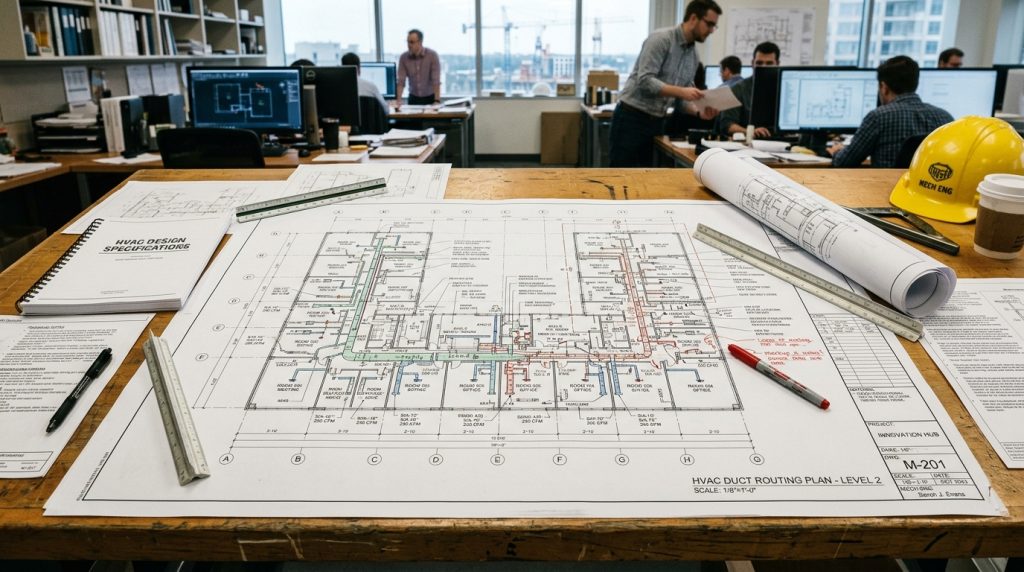
Why HVAC Planning Matters in New Construction
HVAC systems represent one of the most important building systems in any new construction project.
A well-designed HVAC system helps:
- Maintain indoor comfort
- Improve energy efficiency
- Support indoor air quality
- Control humidity
- Reduce operating costs
- Enhance property value
Because HVAC infrastructure becomes integrated into the building itself, mistakes made during construction can be difficult and expensive to correct later.
Proper planning allows builders to coordinate HVAC systems with:
- Architectural layouts
- Structural components
- Electrical systems
- Plumbing systems
- Insulation strategies
- Ventilation requirements
This integrated approach often produces better long-term results.
Starting HVAC Planning Early
One of the most common mistakes in new construction is delaying HVAC planning until later stages of the project.
Ideally, HVAC considerations should begin during the design phase.
Early planning allows project teams to:
- Optimize equipment placement
- Design efficient duct routes
- Coordinate mechanical spaces
- Improve energy performance
- Reduce construction conflicts
When HVAC design is incorporated early, builders often gain greater flexibility and fewer costly revisions.
Team Coordination Is Critical
Successful HVAC planning typically involves collaboration among:
- Builders
- Architects
- Mechanical designers
- Engineers
- HVAC contractors
- Property owners
Each participant contributes information that influences overall system performance.
This collaborative approach helps ensure the final system supports both construction goals and occupant comfort expectations.
The Importance of Proper HVAC Sizing
One of the most important aspects of HVAC design is equipment sizing.
Many people assume larger equipment automatically provides better comfort, but oversized systems can create numerous problems.
Oversized systems may cause:
- Short cycling
- Uneven temperatures
- Humidity issues
- Increased wear and tear
- Reduced efficiency
Undersized systems may struggle to maintain comfort during periods of extreme weather.
Load Calculations Matter
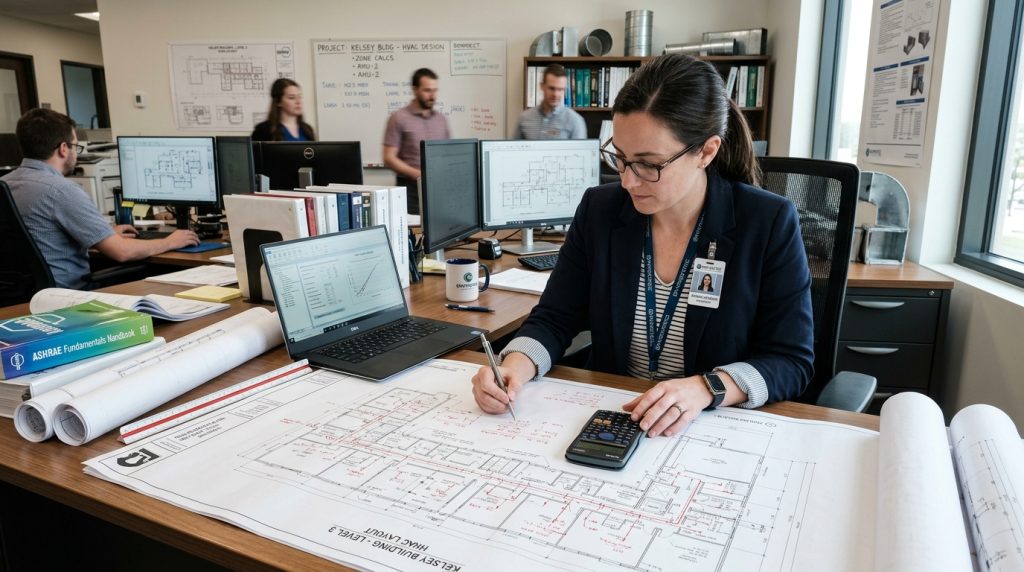
Professional HVAC designers use load calculations to determine system requirements.
These calculations evaluate factors such as:
- Building size
- Insulation levels
- Window performance
- Air leakage
- Occupancy patterns
- Local climate conditions
Accurate load calculations help ensure equipment is properly matched to building needs.
According to the U.S. Department of Energy, proper system design is one of the most important factors influencing long-term HVAC efficiency and performance through energy-efficient heating and cooling systems.
Equipment Selection for New Construction
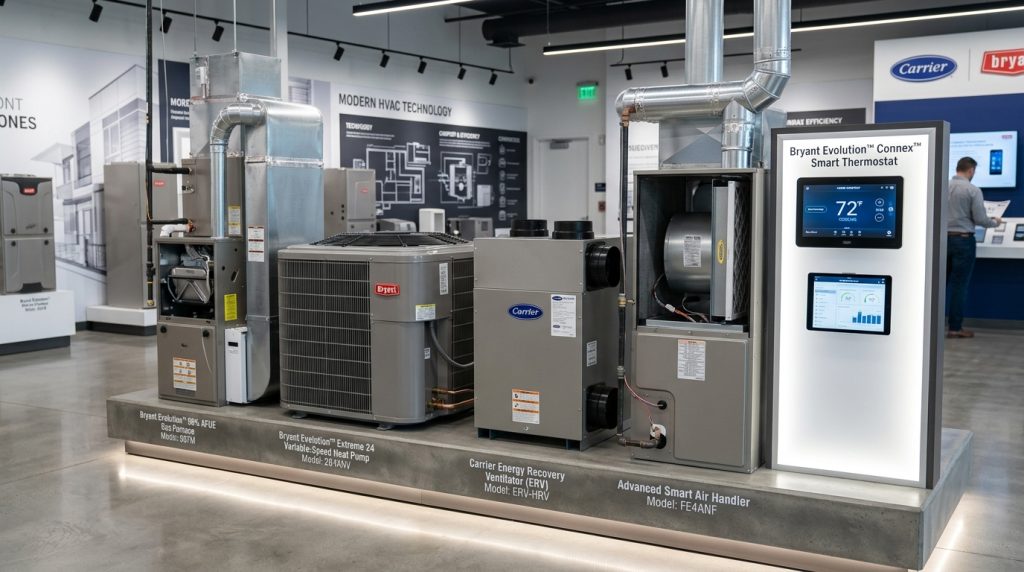
New construction projects offer greater flexibility when selecting HVAC equipment because there are fewer existing constraints.
Common options include:
- High-efficiency furnaces
- Heat pumps
- Dual-fuel systems
- Ductless systems
- Zoned HVAC systems
- Hybrid heating solutions
Equipment selection should reflect:
- Building size
- Occupancy needs
- Energy goals
- Budget considerations
- Climate conditions
Because Michigan experiences both significant heating and cooling demands, equipment choices should support year-round performance.
Planning for Future Efficiency
Builders increasingly prioritize:
- High-efficiency equipment
- Smart controls
- Variable-speed technology
- Advanced filtration
- Ventilation systems
These features can improve comfort while reducing long-term operating costs.
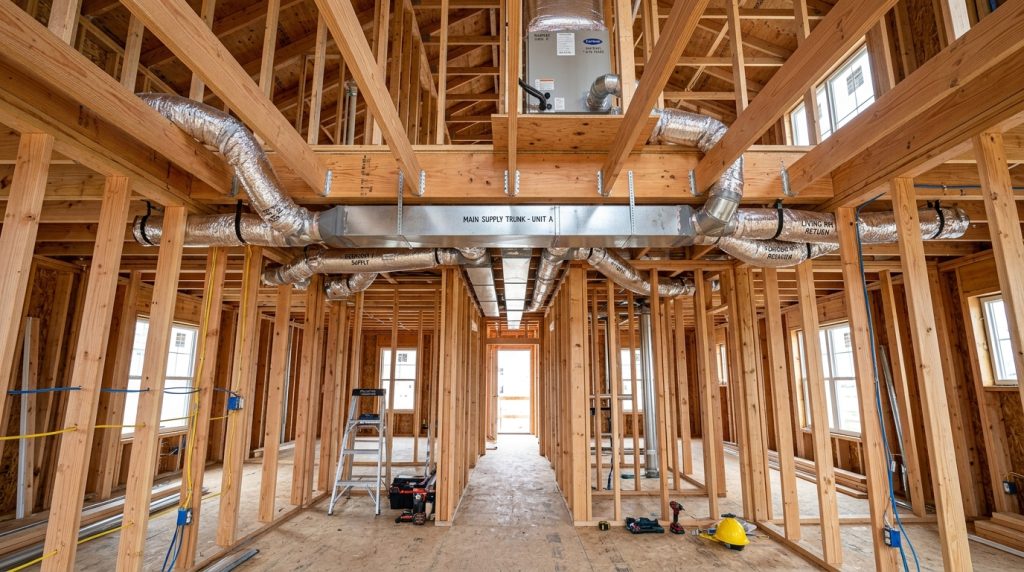
Ductwork Design: The Foundation of HVAC Performance
Even the most advanced HVAC equipment may underperform if ductwork is poorly designed.
Proper ductwork design influences:
- Airflow distribution
- Comfort consistency
- Energy efficiency
- Noise levels
- Equipment performance
Because ductwork is installed during construction, proper planning is essential.
Common Ductwork Design Considerations
Effective ductwork design often includes:
- Balanced airflow
- Proper sizing
- Minimal restrictions
- Efficient routing
- Adequate return air pathways
These factors help ensure conditioned air reaches occupied spaces efficiently.
The Cost of Poor Duct Design
Improper ductwork may contribute to:
- Uneven temperatures
- Increased utility costs
- Excessive equipment wear
- Reduced comfort
- Airflow complaints
Addressing these issues after construction is typically far more expensive than designing duct systems correctly from the start.
Ventilation Requirements in Modern Buildings
Modern building practices emphasize energy efficiency through improved insulation and tighter building envelopes.
While these improvements reduce energy loss, they also reduce natural air exchange.
As a result, ventilation planning becomes increasingly important.
Benefits of proper ventilation include:
- Improved indoor air quality
- Reduced indoor contaminants
- Better humidity management
- Enhanced occupant comfort
- Healthier indoor environments
Ventilation systems should be integrated into HVAC planning rather than treated as separate components.
Indoor Air Quality Considerations in New Construction
Indoor air quality should be a central consideration during new construction HVAC planning. Modern buildings are often designed with tighter building envelopes to improve energy efficiency, but reduced natural air leakage can increase the importance of mechanical ventilation and air quality management.
When properly integrated during construction, indoor air quality solutions can help support:
- Occupant health
- Comfort
- Energy efficiency
- Ventilation performance
- Humidity control
Because HVAC systems play a major role in airflow and filtration, indoor air quality planning should occur alongside equipment and ductwork design decisions.
Filtration and Air Cleaning
Builders increasingly incorporate:
- High-efficiency air filters
- Whole-home air purification systems
- Advanced filtration technologies
- Ventilation enhancements
These solutions help reduce airborne particles while supporting healthier indoor environments.
Humidity Management
Humidity control becomes especially important in Michigan because seasonal weather conditions can vary dramatically throughout the year.
Effective humidity management helps:
- Reduce moisture-related concerns
- Improve comfort
- Protect building materials
- Support indoor air quality
Integrating humidity control solutions during construction is often easier than retrofitting them later.
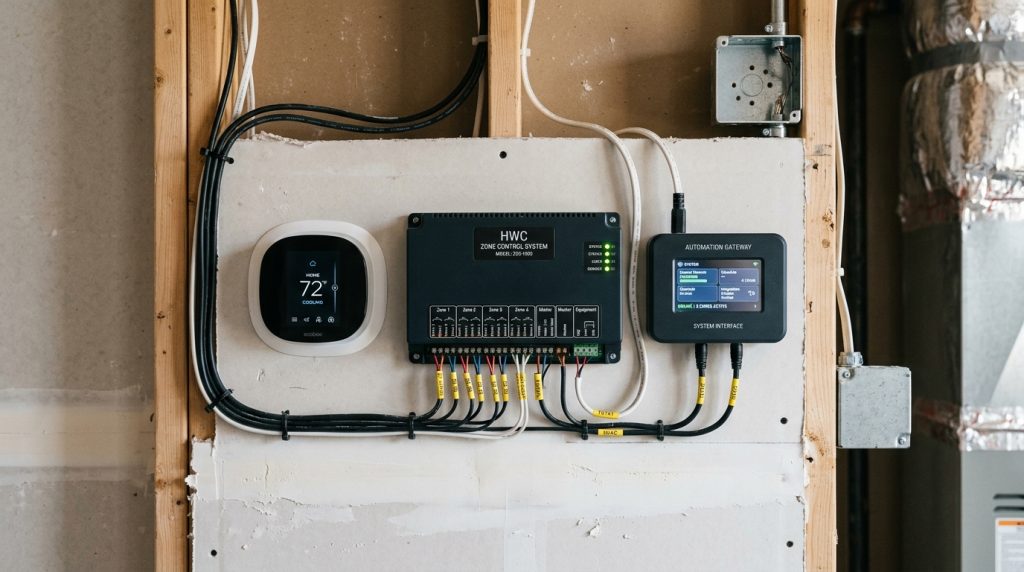
Smart Controls and Zoning Strategies
Modern HVAC planning increasingly incorporates smart technologies that improve comfort, efficiency, and operational flexibility.
Smart controls allow building owners to:
- Monitor system performance
- Optimize energy usage
- Manage multiple comfort zones
- Adjust schedules automatically
- Improve occupant comfort
These technologies are becoming increasingly common in both residential and commercial construction projects.
Benefits of HVAC Zoning
Zoning allows different areas of a building to maintain independent temperature settings.
Advantages may include:
- Improved comfort
- Reduced energy waste
- Better occupancy management
- Greater control flexibility
Large homes and commercial facilities often benefit significantly from zoning strategies.
Building Automation and Future Readiness
Modern control systems provide opportunities to integrate:
- Smart thermostats
- Occupancy sensors
- Energy monitoring systems
- Building automation platforms
Planning for future technology integration during construction can help protect long-term building value.
Energy Efficiency Strategies for New Construction
New construction provides one of the best opportunities to maximize HVAC efficiency because systems can be designed around building performance goals from the start.
Builders often focus on:
- High-efficiency equipment
- Advanced insulation
- Proper air sealing
- Efficient ductwork
- Smart controls
- Ventilation optimization
When these elements work together, overall building performance often improves substantially.
Many project teams evaluate ENERGY STAR certified HVAC equipment because it provides recognized efficiency benchmarks for residential and commercial systems.
Whole-Building Performance Matters
HVAC efficiency is not determined solely by equipment ratings.
Building performance also depends on:
- Insulation quality
- Window performance
- Air leakage rates
- Duct design
- Ventilation effectiveness
A holistic design approach often delivers the greatest efficiency benefits.
Avoiding Common HVAC Planning Mistakes
Many HVAC challenges encountered after construction can be traced back to planning decisions made during the design phase.
Common mistakes include:
- Improper equipment sizing
- Poor ductwork routing
- Inadequate mechanical space allocation
- Delayed contractor involvement
- Insufficient ventilation planning
- Lack of zoning considerations
These issues can lead to comfort complaints, increased operating costs, and expensive post-construction modifications.
Mechanical Space Planning
Builders should ensure adequate space for:
- HVAC equipment
- Ductwork
- Maintenance access
- Filtration systems
- Ventilation components
Mechanical access is often overlooked during early design stages but becomes critical throughout the building’s lifespan.
Planning for Maintenance
Equipment should be positioned so that future maintenance and service activities can be performed efficiently.
Proper access helps:
- Reduce service costs
- Improve maintenance quality
- Extend equipment lifespan
- Support long-term reliability
Choosing the Right HVAC Contractor
Selecting an experienced HVAC contractor is one of the most important decisions in a new construction project.
HVAC contractors contribute to:
- System design
- Equipment selection
- Ductwork planning
- Installation quality
- Performance optimization
Because HVAC systems affect comfort and energy costs for years to come, contractor expertise can have lasting consequences.
What Builders Should Evaluate
When comparing contractors, consider:
- Licensing
- Insurance
- Certifications
- New construction experience
- Design capabilities
- Installation standards
- Maintenance services
Contractors with extensive new construction experience often provide valuable input during early planning stages.
Evaluating Reputation and Experience
Many builders and property owners also review public business profiles to better understand customer experiences, project quality, responsiveness, and overall reputation before selecting an HVAC provider.
Reviews should be considered alongside technical qualifications and project experience.
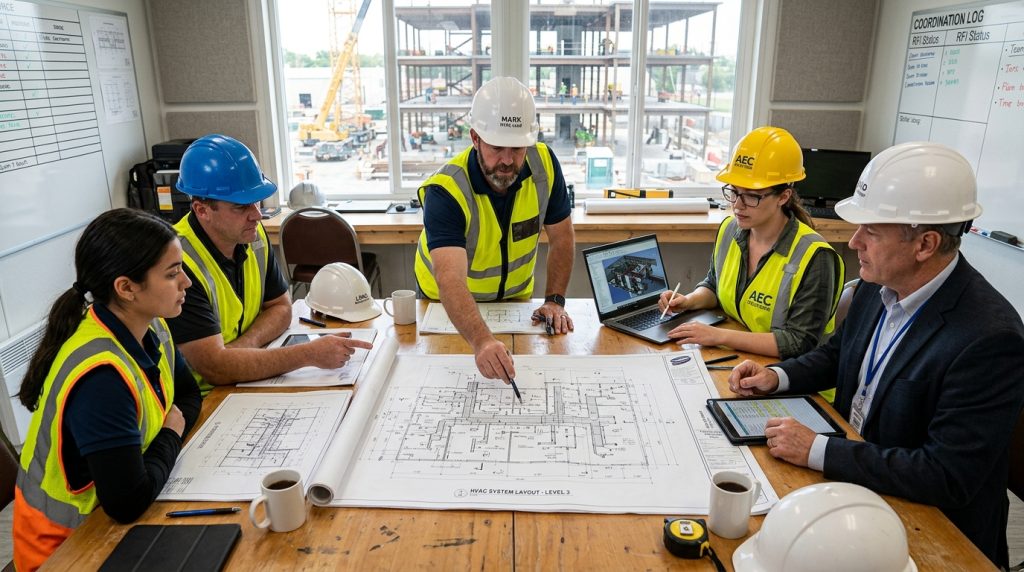
Construction Coordination and Project Success
Successful HVAC installations require coordination between multiple trades and project stakeholders.
HVAC planning often intersects with:
- Structural design
- Electrical systems
- Plumbing systems
- Framing layouts
- Insulation installation
- Architectural requirements
Early coordination helps reduce construction conflicts and improve project efficiency.
Benefits of Integrated Planning
Integrated planning often results in:
- Fewer delays
- Better system performance
- Improved energy efficiency
- Reduced change orders
- Higher occupant satisfaction
The earlier HVAC planning begins, the more opportunities exist to optimize building performance.
Conclusion
New construction offers a unique opportunity to design HVAC systems that support comfort, efficiency, indoor air quality, and long-term building performance. By integrating HVAC planning into the design process early, builders can avoid many of the challenges that commonly arise when systems are treated as secondary considerations.
From equipment sizing and ductwork design to ventilation planning, smart controls, and contractor coordination, every decision influences how the building will perform for years to come.
For Michigan builders, where HVAC systems must handle both severe winters and humid summers, thoughtful planning is especially important. A well-designed system not only improves comfort but can also reduce operating costs, support healthier indoor environments, and enhance overall property value.
Whether the project involves a custom home, residential development, commercial facility, or mixed-use property, investing time in HVAC planning during construction often delivers substantial long-term benefits.
Frequently Asked Questions
What is new construction HVAC planning?
New construction HVAC planning is the process of designing heating, cooling, ventilation, and indoor air quality systems before a building is completed. Early planning helps improve comfort, efficiency, and long-term performance.
Why should HVAC planning start during the design phase?
Early planning allows builders, architects, and HVAC professionals to coordinate equipment placement, ductwork routing, ventilation requirements, and mechanical space allocation before construction progresses too far.
How is HVAC design different in new construction compared to replacement projects?
New construction offers greater flexibility because systems can be designed specifically for the building. Replacement projects must often work around existing layouts, equipment locations, and infrastructure constraints.
Why are HVAC load calculations important?
Load calculations help determine the proper equipment size based on factors such as insulation levels, window performance, building orientation, occupancy, and local climate conditions.
What happens if HVAC equipment is oversized?
Oversized equipment may cause:
- Short cycling
- Uneven temperatures
- Humidity problems
- Increased wear and tear
- Reduced efficiency
Proper sizing is critical for long-term performance.
How does ductwork design affect HVAC performance?
Professional ductwork design influences airflow, comfort consistency, energy efficiency, noise levels, and overall HVAC system effectiveness.
Why is ventilation important in modern construction?
Modern energy-efficient buildings are often tightly sealed, reducing natural airflow. Proper ventilation helps introduce fresh air, remove indoor contaminants, and support healthier indoor environments.
What HVAC systems are commonly used in new construction?
Common options include:
- High-efficiency furnaces
- Heat pumps
- Dual-fuel systems
- Zoned HVAC systems
- Ductless mini-splits
- Variable-speed HVAC equipment
The best choice depends on project goals, climate conditions, and budget.
Can smart controls improve HVAC performance?
Yes. Smart controls can help optimize energy use, improve comfort, manage multiple zones, and provide valuable performance monitoring capabilities.
How can builders improve HVAC energy efficiency?
Builders often improve efficiency through:
- High-performance insulation
- Air sealing
- Efficient ductwork
- High-efficiency equipment
- Smart controls
- Proper ventilation design
Why is choosing the right HVAC contractor important?
An experienced HVAC contractor can help ensure proper system design, equipment selection, installation quality, and long-term performance.
When should builders involve HVAC professionals?
Ideally, HVAC professionals should participate during the early design phase so that equipment sizing, ductwork layouts, ventilation strategies, and mechanical space requirements can be integrated into the overall building plan.