

Women’s lab coats should look professional, fit comfortably over scrubs or workwear, and support daily movement in clinical settings. The right coat should provide coverage without feeling bulky, allow shoulder and sleeve movement, offer useful pockets, and remain easy to clean after regular workplace use.
When comparing women’s lab coats, healthcare professionals should look beyond size and color. Fit, coat length, sleeve length, fabric weight, pocket layout, closure style, laundering needs, and workplace requirements all affect how well a lab coat performs during the workday.
Quick Answer
The best women’s lab coats fit comfortably through the shoulders, sleeves, chest, and torso while allowing movement over scrubs or professional clothing. They should provide enough coverage, useful pocket space, durable fabric, easy-care laundering, and a professional appearance suited to the workplace.
Healthcare workers should choose a lab coat based on role, coat length, layering needs, pocket function, fabric comfort, sleeve mobility, and employer dress code rules.

Why Lab Coat Fit Matters in Healthcare
A lab coat is often part of a professional healthcare uniform. It may be worn by doctors, nurse practitioners, physician assistants, pharmacists, dental professionals, medical students, laboratory staff, and other clinical workers. Since lab coats are usually layered over scrubs or other work apparel, the fit needs to account for movement and comfort.
The U.S. Bureau of Labor Statistics describes healthcare occupations across many clinical, technical, and patient-facing settings. This variety shows why uniforms and professional apparel must support different roles, movement patterns, and workplace expectations. The BLS overview of healthcare occupations provides useful context for the range of work environments where professional medical apparel may be used.
A well-chosen women’s lab coat can help with:
- Professional presentation
- Added coverage over scrubs
- Convenient pocket storage
- Role identification
- Layering in cooler settings
- Comfort during patient-facing work
- Consistency for students or clinical teams
- Practical daily wear in healthcare environments
A poor fit can cause problems. Tight shoulders may restrict movement, long sleeves may interfere with hand use, and a coat that is too large may feel bulky or unpolished.
Key Features to Compare in Women’s Lab Coats
Women’s lab coats vary by cut, length, pocket design, fabric, buttons, collar shape, and sleeve construction. Comparing these details helps healthcare workers choose a coat that fits the body and the work setting.
Shoulder and Upper Back Fit
The shoulder area should allow reaching, turning, and light lifting without pulling across the upper back. Since lab coats are often worn over scrubs or tops, the coat should have enough room for layering without looking oversized.
When trying on a lab coat, test:
- Reaching forward
- Raising both arms
- Turning the upper body
- Sitting and standing
- Buttoning or closing the coat
- Wearing it over normal work clothing
If the coat pulls at the shoulders or chest, it may feel uncomfortable during clinical movement.

Sleeve Length
Sleeve length matters because healthcare workers need their hands free for tasks. Sleeves that are too long can interfere with writing, typing, handwashing, patient interaction, and glove use. Sleeves that are too short may look awkward or feel uncomfortable.
A good sleeve should sit neatly near the wrist without covering the hand or pulling upward too much when the arms move.
Coat Length
Lab coats come in different lengths, including consultation length, mid-length, and longer traditional styles. The right length depends on workplace expectations, role, body height, and personal preference.
Shorter coats may feel easier for movement and sitting. Longer coats may provide more coverage and a more traditional professional look. Workers comparing a ladies lab coat should test the length while walking, sitting, bending, and moving between tasks.
Closure Style
Most lab coats use buttons or snaps. The closure should lie smoothly without pulling across the chest, waist, or hips. If a coat gaps when buttoned, the size or cut may not be right.
Choosing the Right Lab Coat Length
Length is one of the biggest decisions when choosing a women’s lab coat. It affects appearance, movement, coverage, and comfort.
Short Lab Coats
Short lab coats often end around the hip or upper thigh. They may be preferred by students, pharmacists, or professionals who want easier movement and less fabric when sitting.
Short lab coats may work well when:
- The workplace allows shorter coats
- Frequent sitting is part of the role
- The wearer wants less bulk
- The coat is mainly for professional presentation
- The coat needs to layer over scrubs comfortably
Mid-Length Lab Coats
Mid-length lab coats offer a balance of coverage and mobility. They are often practical for professionals who want a polished look without the extra fabric of a long coat.
Mid-length coats may work well for clinical providers, medical assistants, students, and workers who need both movement and coverage.
Long Lab Coats
Longer lab coats create a traditional medical appearance and provide more coverage. They may be preferred by doctors, laboratory professionals, instructors, or healthcare workers in settings where a more formal coat is expected.
Long coats should still allow comfortable walking and sitting. If the coat feels restrictive or bulky, a shorter or more tailored option may work better.
Fabric Features That Matter in Lab Coats
Fabric affects how a lab coat feels, moves, washes, and looks during daily use. A professional coat should feel structured enough to look polished but comfortable enough for regular wear.
Fabric Weight
A heavier fabric may feel more structured, while a lighter fabric may feel easier to wear for long periods. The best choice depends on workplace temperature, layering needs, and how often the coat is worn.
Breathability
Breathable fabric can help reduce discomfort when the coat is worn over scrubs or other layers. This is especially useful in busy clinics, labs, or warmer work areas.
Stretch
Some lab coats include stretch or flexible construction. This can improve comfort through the shoulders, sleeves, and back. Stretch is helpful for workers who reach, bend, chart, examine patients, or move between rooms frequently.
Durability
Lab coats may be washed often, especially in clinical or laboratory settings. Seams, buttons, pockets, cuffs, and fabric surfaces should hold up to regular wear and laundering.
Easy-Care Performance
A lab coat should remain presentable after washing. Wrinkle resistance, color retention, and shape stability are important for professionals who need a clean look throughout the week.
Pocket Design and Daily Function
Pockets are a major reason many healthcare workers wear lab coats. A coat should provide storage without becoming bulky or pulling out of shape.
Useful lab coat pocket features may include:
- Chest pocket
- Lower front pockets
- Interior pockets
- Pen slots
- Phone pocket
- Badge loop
- Side access openings
- Secure pocket closures
The right pocket layout depends on the role. A provider may carry a pen, phone, note card, or small clinical tool. A student may need a notebook or reference card. A lab worker may need storage that stays out of the way during technical tasks.
Workers comparing a female lab coat should test pocket access while standing, sitting, and walking. Pockets should be useful but not overloaded.
Lab Coats for Different Healthcare Roles
Different healthcare roles may require different lab coat features. The best coat depends on how it will be used during the workday.
Doctors and Clinical Providers
Doctors, nurse practitioners, physician assistants, and other providers may need a polished lab coat that layers well over scrubs or professional clothing. Fit, length, fabric structure, and pocket placement are especially important in patient-facing settings.
Pharmacists
Pharmacists may prefer coats that look professional, allow comfortable movement, and provide useful pocket space for pens, notes, or work tools. Sleeve length should not interfere with daily tasks.
Medical Students
Medical students should follow school or clinical program requirements. Many programs specify coat length, embroidery, color, or style. Students should choose a coat that meets those rules while still fitting comfortably.
Laboratory Workers
Laboratory staff may need coats that align with workplace safety requirements. In some settings, the coat may need specific fabric, closure, sleeve, or coverage standards. Workers should follow employer policies and safety rules.
Dental and Clinic Staff
Dental and clinic workers may wear lab coats for professional appearance, coverage, or layering. Coats should allow comfortable upper-body movement and should not interfere with seated work.
Lab Coats, Scrubs, and Layering
A lab coat should be tested over the clothing normally worn at work. A coat that fits over a thin top may feel tight over a scrub set, underscrub, or thicker layer.
When layering, check:
- Shoulder comfort over a scrub top
- Sleeve movement over an underscrub
- Whether the coat buttons smoothly
- Whether the coat pulls across the chest
- Whether the length works with scrub pants
- Whether pockets remain accessible
- Whether the full uniform looks balanced
A lab coat should complement the rest of the uniform. It should not make the wearer feel restricted or overheated.
Workplace Dress Code and Safety Considerations
Lab coat requirements vary by workplace. Some employers require specific coat lengths, embroidery, colors, name placement, credentials, or department standards. Schools and clinical programs may also have strict lab coat requirements.
Before buying, healthcare workers should confirm:
- Required coat color
- Required coat length
- Approved embroidery format
- Name and credential rules
- Sleeve or cuff requirements
- Closure style expectations
- Whether the coat must be worn over scrubs
- Laundering requirements
- Safety or infection-control policies
Lab coats should not be confused with all forms of protective apparel. OSHA explains that personal protective equipmentis used to reduce exposure to workplace hazards that may cause injuries or illnesses. Depending on the setting, workers may need specific PPE beyond a standard lab coat.
Laundering and Care Considerations
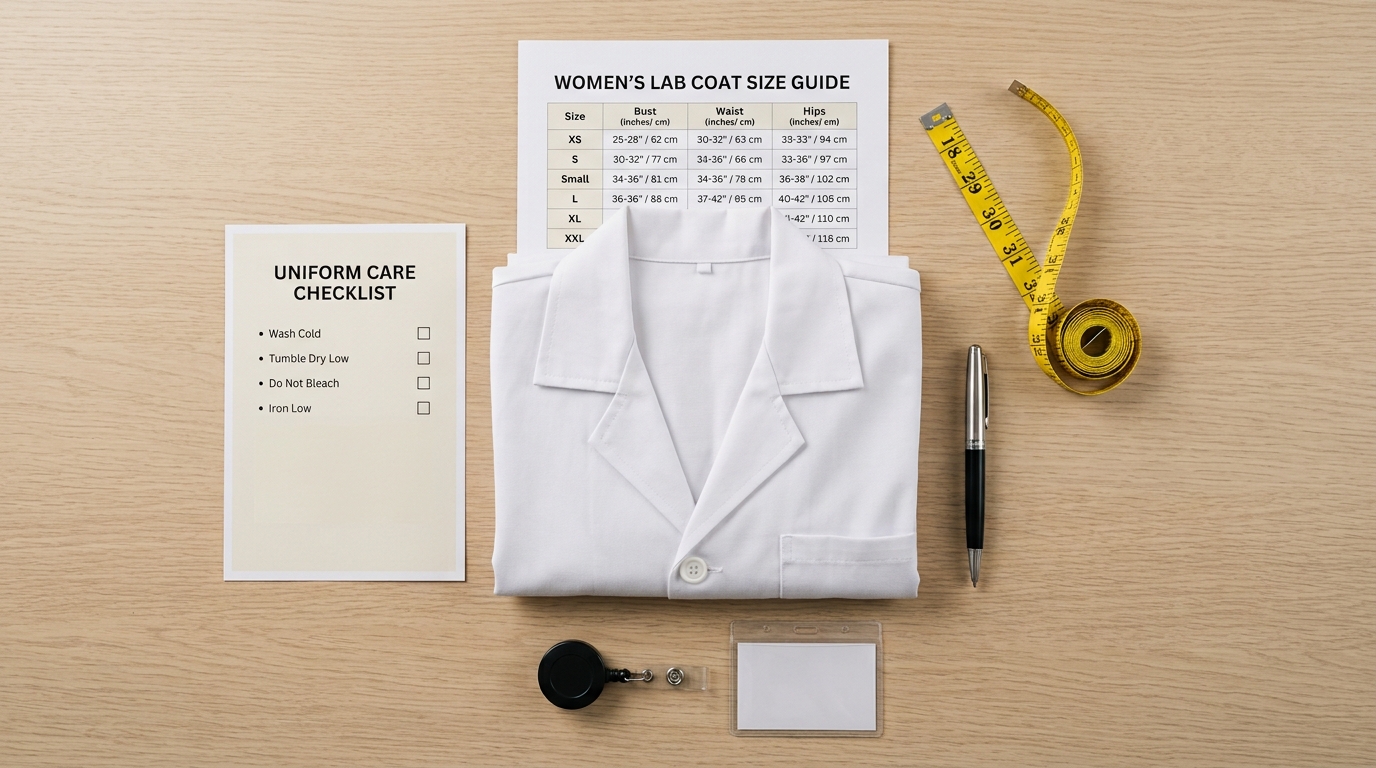
Women’s lab coats should be easy to clean and maintain. A coat that wrinkles heavily, shrinks, stains easily, or loses shape may not be practical for regular healthcare use.
The CDC provides guidance on healthcare laundry and bedding, including cleaning considerations for healthcare textiles. Workers should follow employer policies, garment care labels, and any infection-control rules that apply to their setting.
Before buying a lab coat, check:
- Wash temperature instructions
- Drying recommendations
- Bleach restrictions
- Ironing guidance
- Shrinkage risk
- Wrinkle resistance
- Button or snap durability
- Pocket and seam construction
- Fabric-specific care requirements
Easy-care lab coats are especially useful for professionals who need a clean, polished coat throughout the week.
Buying Women’s Lab Coats Online or Locally
Online shopping works well when the buyer already knows the correct size, length, and style. Local shopping is better when trying a lab coat for the first time, checking sleeve length, comparing coat lengths, or testing movement over scrubs.
A verified West Chester medical uniform store listing can help local shoppers confirm store details and directions before visiting.
Local shopping can help with:
- Trying different coat lengths
- Checking sleeve length
- Testing shoulder movement
- Comparing fabric weight
- Reviewing pocket placement
- Layering over scrubs
- Confirming professional appearance
- Asking about embroidery or group needs
Online ordering can help with:
- Reordering known sizes
- Browsing available coat styles
- Comparing size charts
- Shopping outside store hours
- Replacing worn coats
- Ordering additional coats for work or school
A combined approach often works best. Try a lab coat locally when fit is uncertain, then reorder preferred styles online once sizing and length are confirmed.
Common Mistakes When Choosing Women’s Lab Coats
Many lab coat problems happen when buyers choose by size alone without checking movement, length, or layering.
Avoid these mistakes:
- Buying a coat without testing shoulder movement
- Ignoring sleeve length
- Choosing a coat that is too tight over scrubs
- Selecting a length that restricts sitting or walking
- Overlooking pocket placement
- Ignoring workplace or school requirements
- Buying several coats before confirming fit
- Skipping laundering instructions
- Assuming all lab coats fit the same
- Treating a standard lab coat as task-specific PPE
A good lab coat should fit the role, the body, and the work setting.
Final Thoughts
Women’s lab coats should be chosen for fit, length, fabric, pockets, layering, and workplace function. The best coat should look professional, feel comfortable over scrubs or work apparel, provide useful storage, and allow movement through the shoulders, sleeves, and torso.
Before buying, healthcare workers should compare coat length, sleeve fit, fabric weight, closure style, pocket layout, laundering needs, and workplace rules. A well-fitted lab coat can support a polished clinical appearance while helping the wearer stay comfortable and prepared during daily healthcare work.
FAQs
How should a women’s lab coat fit?
A women’s lab coat should fit comfortably through the shoulders, chest, sleeves, and torso while allowing movement over scrubs or work clothing. It should not pull when buttoned, restrict reaching, or feel bulky when sitting, walking, or bending.
What length lab coat is best for women?
The best lab coat length depends on role, workplace rules, height, and preference. Short coats offer easier movement, mid-length coats balance coverage and mobility, and long coats provide a traditional professional look. The coat should be tested while sitting and walking.
Are women’s lab coats worn over scrubs?
Many healthcare professionals wear lab coats over scrubs, but requirements vary by workplace. The coat should be tested over the clothing normally worn during work to make sure the shoulders, sleeves, chest, and closure feel comfortable.
What pockets should a lab coat have?
Useful lab coat pockets may include a chest pocket, lower front pockets, interior pockets, pen slots, and phone storage. The best pocket layout depends on the worker’s role and should stay comfortable when carrying small daily essentials.
Are lab coats considered PPE?
Some lab coats may be used as part of workplace protective apparel, but a standard lab coat is not a substitute for all required PPE. Healthcare workers should follow employer safety policies, which may require gloves, gowns, masks, eye protection, or other protective equipment.